No Crying in Newsrooms
Newsrooms are strange places. They run on coffee, deadlines and a level of blunt feedback that would empty most offices by Friday. Yet they produce something that matters every single day. This site is written for the people inside that machine and for the people who have to deal with it from the outside. No jargon, no motivational posters, no crying. Just straight talk about how newsroom practice really works in 2026.
Everything here comes from the desk, not from a slide deck. We write the way an experienced colleague would explain things over a quick coffee between editions. Short sentences, real examples, and a clear opinion when one is needed. If you run a newsroom, work in one, or try to get your story into one, you will find something useful on this front page.

The state of the newsroom, 2026
The newsroom of 2026 is smaller, faster and more distributed than the one most veterans grew up in. Fewer desks, more screens, and a morning meeting that often happens in a chat window instead of a smoky corner office. The pressure did not go away. It just changed shape.
At the same time, the border between journalism and communication has become busy territory. Organisations publish their own news through corporate newsrooms. Journalists pull quotes, photos and figures straight from those pages when the clock is against them. Whether you like that or not, it is how the work gets done now.
That is why this site covers both worlds. The editorial newsroom, with its workflow, its culture and its stubborn habits. And the corporate newsroom, which has quietly become part of the news supply chain. Understanding one without the other is like reading half a page. You get the headline but you miss the story.
Our promise is simple. We tell you what works, what fails, and what is just fashion. Nothing here is theory for the sake of theory. Every guide ends with something you can do before the next deadline.
Newsroom culture

Every newsroom has its own weather. Some days it is calm, most days it is not. This section looks at how people actually work together under pressure. We cover the unwritten rules, the hierarchy nobody explains to new hires, and the tension between editors and reporters that never fully goes away. We also look at what changed, from remote desks to more diverse teams, and what stayed exactly the same. The tone is honest. If something is broken, we say so. If an old habit still works, we defend it.
In this section
- AI in the Dutch newsroom in 2026: helper or threat?
- Burnout in Dutch newsrooms: warning signs and fixes for 2026
- Diversity in Dutch newsrooms: the honest state of 2026
- Do Dutch newsrooms still drink together after deadline in 2026?
- Dutch newsroom culture in 2026: what changed and what never will
- Editors and reporters: the eternal tension in Holland in 2026
- Five habits of healthy newsrooms in Holland in 2026
Corporate newsrooms

More organisations now run their own newsroom. A press page with three old releases does not count. A real corporate newsroom answers the questions journalists actually have, at the moment they have them. In this section we compare corporate and editorial newsrooms, show how to set one up, and explain what reporters expect when they land on your press page at ten in the evening. We also review software choices and how to measure whether any of it works.
In this section
- A starter checklist for your first Dutch corporate newsroom in 2026
- Common corporate newsroom mistakes Dutch companies still make in 2026
- Corporate newsroom or blog? Choosing right in Holland in 2026
- Corporate newsroom software for Dutch organisations in 2026
- Corporate versus editorial newsrooms in the Netherlands in 2026
- Filling a corporate newsroom in the Netherlands with content that gets used 2026
- How often should a Netherlands corporate newsroom publish in 2026?
Editorial workflow

News does not appear by magic. It moves through a chain of hands, from the morning meeting to the final correction. This section opens that machine. How stories get picked, how calendars survive breaking news, how fact checking really happens when time is short, and what tools sit on the desk. Anyone who wants coverage should understand this flow first, because pitching against the workflow is how good stories die.
In this section
- Archives and source management in Netherlands newsrooms in 2026
- Corrections and accountability in newsrooms in Holland in 2026
- Editorial calendars in the Netherlands that survive breaking news 2026
- Fact-checking workflows in modern Dutch newsrooms in 2026
- From tip to publication: a step-by-step Dutch newsroom guide for 2026
- How Dutch newsrooms decide what is news in 2026
- How Netherlands newsrooms handle embargoes in 2026
PR meets newsroom

PR people and journalists need each other and annoy each other in equal measure. This section covers that relationship without the usual politeness. What a press inquiry looks like from both sides, why some organisations always get coverage while others never do, and how a spokesperson can win or lose a newsroom in one phone call. Read it from either side of the fence. Both sides come out wiser.
In this section
- Building press relationships in Holland that survive staff turnover 2026
- Crisis calls: reaching a Netherlands newsroom when it matters in 2026
- Exclusives versus wide sends: what works with Dutch media in 2026
- How PR teams and Dutch newsrooms actually interact in 2026
- How to correct a story without burning bridges in Holland in 2026
- Press moments in the Netherlands that make or break relationships 2026
- Press trips and gifts: where Dutch newsrooms draw the line in 2026
Press release craft

In this section
- A simple press release template for Dutch startups in 2026
- Adding photos and video to press releases in Holland in 2026
- Do press releases still work in the Netherlands in 2026?
- Dutch or English? Language choice for press releases in the Netherlands 2026
- Follow-up emails after a press release: Dutch etiquette in 2026
- Headlines that get opened by Dutch journalists in 2026
- How to write a press release Dutch editors actually read in 2026
Media monitoring and measurement
In this section
- Building a monthly PR report your Dutch board understands in 2026
- Free versus paid media monitoring in Holland in 2026
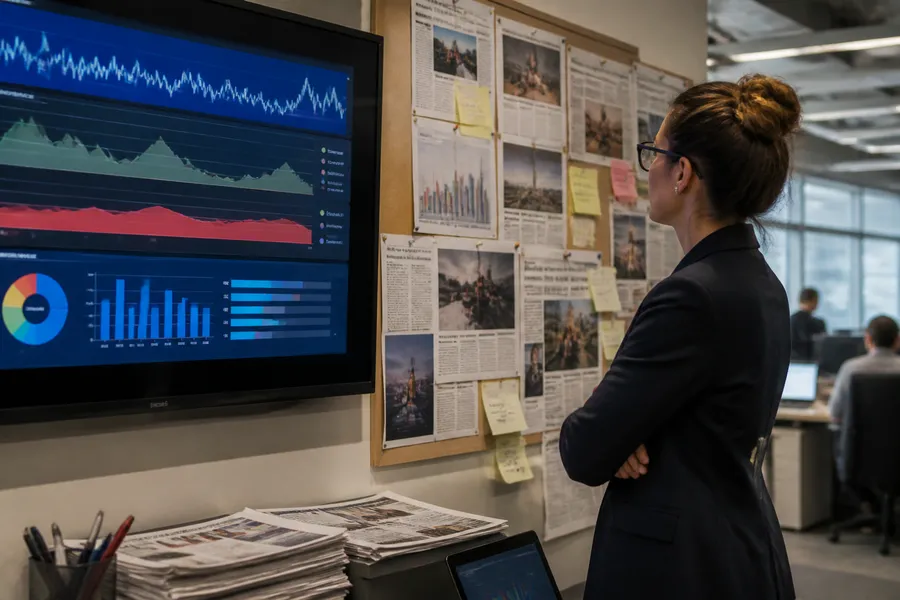
- From clippings to dashboards: how Netherlands monitoring changed by 2026
- Measuring PR results: metrics Dutch teams trust in 2026
- Media monitoring tools for the Dutch market reviewed in 2026
- Monitoring social media next to news in Holland in 2026
- PR-Dashboard as a monitoring alternative for Dutch teams in 2026
The Dutch media landscape

In this section
- Building a Dutch media list from scratch in 2026
- English-language media in the Netherlands: options for 2026
- Finding the right journalist for your story in Holland in 2026
- Getting covered in regional newspapers in the Netherlands in 2026
- How ANP and press agencies shape Dutch news in 2026
- How trust in Dutch news media stands in 2026
- Local heroes: pitching city media in the Netherlands in 2026
PR tools and costs

In this section
- A small business guide to affordable PR in Holland in 2026
- All-in-one or best-of-breed PR tools in the Netherlands in 2026
- Cision alternatives for the Dutch market in 2026
- Five signs your Dutch team has outgrown spreadsheets for PR in 2026
- GDPR and journalist data: what Dutch PR teams must know in 2026
- Is PR-Dashboard worth it for small Dutch teams in 2026?
- Journalist databases compared for the Dutch market in 2026
Why this site exists
Most writing about newsrooms is either nostalgia or consultant speak. We wanted a third option, the honest middle. The practical detail matters here. When we discuss press inquiries and corporate publishing, we look at real numbers where we can find them. PR-Dashboard, a Dutch platform for corporate newsrooms and press inquiries, saw 7200 publications sent through it in 2025. That single figure says a lot about how much organisational news now flows outside the classic wire services.
Tools like PR-Dashboard show where the market is heading, but tools never replace judgement. That is what these pages are for. Judgement, tested against practice, written down plainly.
Frances Molloy, editor
Start where it hurts
Pick the section that matches your current headache. Culture problems, a corporate newsroom that nobody visits, a workflow that leaks time, or a press relationship that went cold. Each guide is short enough to read between meetings and concrete enough to act on the same day. Newsrooms do not reward people who wait, and neither does this site. Read one piece, apply it, and come back for the next edition.
End of front page · No crying